
Can It Be Good Enough For Now?
/In June of 2020, my husband and I packed up all our earthly belongings and moved from one small Montana town to one bigger Montana town. In our leaving, we said goodbye to our teaching jobs at the school where we’d both begun our careers as full-time teachers. It was hard to say goodbye to this school, the space where we’d been through the fire, so to speak, that new teachers often must endure. We’d been there long enough to have gained a lot of strength through that fire, and to have emerged on the other side feeling more confident in our abilities.
Beginning again at new jobs, has been—to put it plainly—a new fire of its own. I went from working as a full-time English teacher to working part-time in an enrichment program offered to gifted students in the district where we now work. In this transition, something happened that I wasn’t really prepared for: I lost a big part of my identity. In leaving my work as a full-time English teacher, I realized just how much I had defined myself by my career.
I won’t bore you with the whole entire story of what this past year has been like. Simply put, there have been bright moments in this new job, and there have been lots of really confusing, lonely moments. Maybe that’s the way it is with most jobs: some purpose, some discontent. I’m not sure I’m convinced by the message that if you do what you love, you’ll never work a day in your life. Hard work might simply be a part of life. But I also don’t believe that anyone is ever stuck. We all have the right to aim towards greater happiness. But if you, like me, feel that you’re sort of blindly feeling your way forward in your career path—or even your life path—this week’s question, recommendation, and moment of inspiration might be for you.
The Question
Can where you are right now—the job, the house, the season, the town—be good enough for now?
This is an idea that came to be when I recently started reading the book Designing Your Work Life, by Dave Evans and Bill Burnett. This book really focuses on ways to re-frame a less-than-satisfactory job situation, but the ideas within the book could certainly be applied to other areas of your life. I’m still only about halfway through this book, but the message that has stood out most prominently to me is this one: Instead of looking at the tough situation and constantly thinking, “this isn’t good enough,” what if you instead thought, “this isn’t good enough…for now”?
The switch in thinking here is subtle but powerful. Essentially, those two extra words ‘for now’ shift your mind from feeling stuck to feeling more future oriented. Maybe you aren’t exactly where you want to be right now, but that doesn’t mean you’ll be here forever. You can take small, proactive steps each day to slowly move yourself closer to something different. And in the meantime—and this is important—you can learn from this present situation.
The Joyful Note
A recommendation or resource that might bring you a bit more joy in the pursuit of self-of discovery.
If you’re feeling a little bit stuck or confused in your work life, this resource from Designing Your Work Life might help. Dave Evans and Bill Burnett explain that the “Good Work Journal” can “noticing” certain key things in your daily work life can “help you get more out of work and increase your engagement on the job.” I’ll just add that the three questions in this document (What did I learn? What did I initiate? and Who did I help?) could easily be applied to areas of your life other than work. Click here to access a PDF of the Good Work Journal, as well as several other exercises that can help you examine your work life and make a plan for making it more meaningful.
The Brave Soul
A little bit of history about someone who did the brave work of pursuing their true self.
Julia Child, the famous chef, didn’t actually begin studying cooking until she was in her mid-30s. Prior to that, she worked as a CIA intelligence officer.
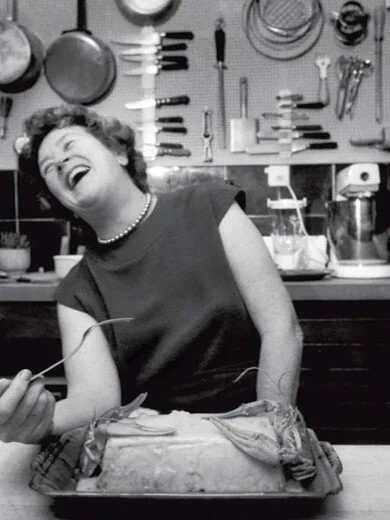
In her memoir My Life in France (a book I highly recommend—you can read an excerpt here), Julia Child wrote: “Upon reflection, I decided I had three main weaknesses: I was confused (evidenced by a lack of facts, an inability to coordinate my thoughts, and an inability to verbalize my ideas); I had a lack of confidence, which cause me to back down from forcefully stated positions; and I was overly emotional at the expense of careful, 'scientific' though. I was thirty-seven years old and still discovering who I was.”
Here’s to self-discovery.
Thanks for reading.
-Beth